
We are proud to announce the publication of volume 5.1 (2021) of International Yeats Studies. Guest edited by Margaret Mills Harper and Alexandra Poulain, the edition focuses on Wheels and Butterflies. In addition to individual contributions from the co-editors, it includes articles by Charles I. Armstrong, Inés Bigot, and Akiko Manabe, as well as reviews by Lloyd (Meadhbh) Houston, Claire Nally, Maria Rita Drumond Viana, and Zsuzsanna Balázs.
Page 4 of 5
Ragini Mohite’s new book addresses W.B. Yeats’s and Rabindranath Tagore’s engagements with identity, nationalism, and the literary and cultural traditions of Ireland and India. It offers a fresh critical perspective on their work from the beginning of the twentieth century, the point at which their international collaborations most significantly influence the cross-border lives of their literature.
This book foregrounds the Yeats-Tagore relationship, significant among their international collaborations, provides a new analysis of the fraught beginning to Tagore’s international fame, and the value of reading his English translations as original texts, as is done by many English-language readers. Of Tagore’s many international acquaintances, Yeats looms largest over his first English-language publications. This brief relationship, in part due to its tensions, is significant when considering literary modernism’s global nature and appeal.
Exploring the thematic parallels and generic innovations in the works of Yeats and Tagore allows readers to recognize the significant moments of tension and divergence in their oeuvres. Reading Yeats and Tagore comparatively offers a timely historical perspective on how the nationalized valences of identity and selfhood might become transnational in contemporary readings.

The International Yeats Society is deeply saddened to learn of the death of George Bornstein—distinguished Yeats scholar, leader in modernist studies, Guggenheim Fellow, Professor at the University of Michigan, and fixture at the Yeats International Summer School. George is beloved by all of us in the Yeats community.
His full obituary can be found here.
December 11th-12th, 2020
Full information about the conference can be found here: Yeats and Popular Culture – 11-12 December 2020 – International Yeats Society and University of Łódź, Poland (lodz.pl
In view of the unasked for popularity that Yeats has won over the years, the conference aims to focus on a two-fold understanding of Yeats’s relationship with pop culture. On the one hand, we wish to explore the issue synchronically, concentrating on Yeats’s contemporary inroads into the realm of the popular, whether via endorsing public schemes, giving public readings, writing letters for the press or indeed spearheading an Irish theatre. On the other, we would like to encourage a diachronic approach to Yeats’s lasting influence on popular culture manifested in all manner of its outlets all over the known universe, from a member of the crew of the starship Enterprise (Star Trek again) quoting ‘The Song of Wandering Aengus’ all the way to Sean Bean’s dying recitation of ‘He Wishes for the Cloths of Heaven’ in a sci-fi classic Equilibrium (2002).
If you have not received a zoom link to the conference, please contact Wit Pietrzak ( WitPietrzak@wp.pl )
Agenda for the General Meeting:
1. Relocation of IYS from Buffalo to Ireland
2. Renewal of the executive board
3. Treasurer’s report
4. JIYS
5. IYS website, mailing list and social media
6. Future conferences
7. Any other business
The International Yeats Society is deeply saddened to learn of the death of Sister Margaret MacCurtain—distinguished historian, feminist, educator, human rights activist, and great friend to many of us in the Yeats community. Her obituary in the Irish Times can be found here: https://www.irishtimes.com/life-and-style/people/pioneering-historian-margaret-maccurtain-has-died-aged-91-1.4373446.
The funeral Mass will be streamed live Thursday, October 8 at 3:00 pm (Irish local time) on https://navanroadparish.com from The Church of Our Lady Help of Christians.
December 12-14, 2019
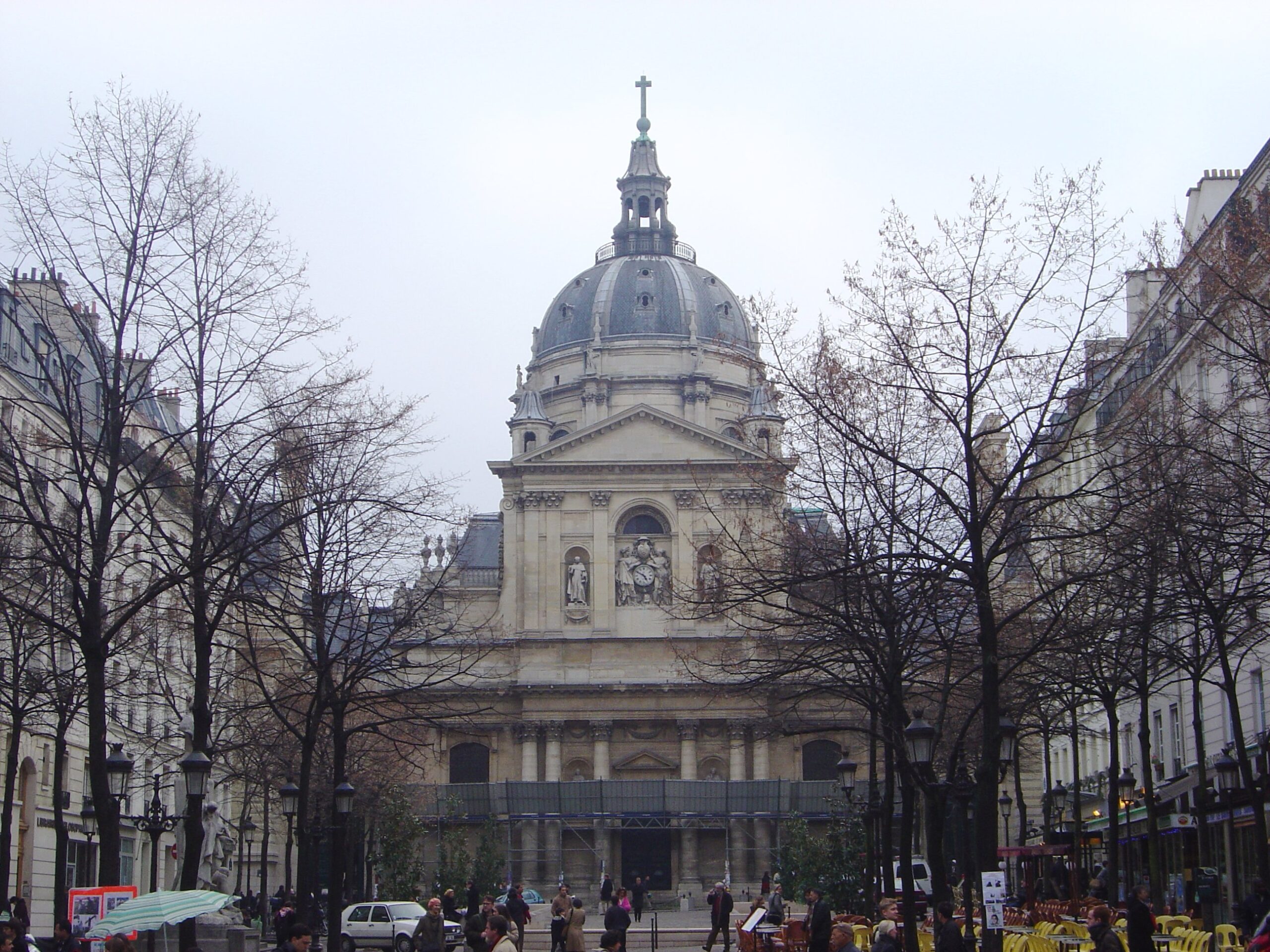
Yeats and Eros invite reappraisals of Yeats’s manifold and often unconventional explorations of the erotic in all its guises. The conference address the ways in which he toys with and renews the conventions of love poetry the embodied representations of desire on the stage, in speech, song or dance the space Yeats makes throughout his oeuvre for the visibility and audibility of unorthodox desires the erotics of delay and frustration on page and stage. Equally of interest are biographically-oriented papers investigating, for instance, the erotics of collaboration in the writing of A Vision, or indeed in all of Yeats’s collaborative ventures with fellow artists, writers, and performers of both genders.
Papers are also invited on the topic of Yeats and Paris. These can deal with any topic related to Yeats’ many visits to the city, including his formative stays in the 1890s. Papers can address his relationship to Symbolism or the life and/or works of French writers such as Paul Verlaine, Villiers de l’Isle-Adam or Stéphane Mallarmé. Also later movements and writers associated with France—including for instance fellow Irishmen such as Synge and Beckett, or Francophone writers responding to Yeats—may be a theme for papers. Another possibility is to look at references and allusions to Paris or France in Yeats’ poems or prose, or how his writings can be more generally contextualized in relation to Paris’s role as a geographical centre of literary modernism.
Organising committee: Inès Bigot (Sorbonne nouvelle), Carle Bonafous-Murat (Sorbonne nouvelle), Claire Davison (Sorbonne nouvelle),Pierre Longuenesse (Université d’Artois), Clíona Ní Ríordáin (Sorbonne nouvelle), Alexandra Poulain (Sorbonne nouvelle) et Kerry-Jane Wallart (Paris-Sorbonne)
Keynote speakers: Prof. Elizabeth Cullingford, University of Texas at Austin and Dr. Matthew Creasy, University of Glasgow

December 15-16, 2018
The International Yeats Society and the Yeats Society of Japan Joint Symposium in Kyoto 2018 was hosted in the Clock Tower Centennial Hall of Kyoto University and the Kashokaku Noh Theatre. This marks the 54th annual conference of the Yeats Society of Japan, and the 4th annual conference of the International Yeats Society.
This year’s theme was “Yeats and Laughter” including topics in thematic and cultural considerations in Yeatsean humor, Yeats and Kyogen, and Kyogen-laughter in Irish folklore & mythology.

New York City Conference 2017
October 20-22, 2017
Hosted by The New School University, Fordham University, and New York University/Glucksman Ireland House, this years theme was 1917, Yeats in America.
Featuring keynote addresses by Maureen Murphy (Hofstra) and Christopher Cahill (American Irish Historical Society). And readings by Nick Laird and Iggy McGovern.
Yeats & Asia: Imagining Asia through Yeats, Imagining Yeats through Asia
For some people the association of Yeats with Asia will suggest references to Byzantium, for others it will suggest Theosophy, the influence of Mohini Chatterjee, Occultism, Rabindranath Tagore or the Upanishads, and others still will think of Nōh theatre, masks, his fugitive use of Zen koans from D.T. Suzuki or the gyres as a version of Yin and Yang. Yeats made both explicit
references to Asian matters in his works, like the Buddha in “The Statues”, and implicit references that might be evident to Asian readers yet otherwise be opaque, like the “polished mirror” in Per Amica Silentiae
Lunae.
There is of course the vexed and vexing question of “Asia” itself, and what it might mean, if indeed it means any one thing. For the ancient Greeks it was the far shore of the Aegean Sea, the opposite and “Other” of their “Europe”, long before Edward Said called attention to the implications and consequences of “Orientalism”. Eurocentric discourse continues to speak of East Asia, if not the Far East, establishing its own vantage point as the defining norm. Some Chinese experts refer to Europe as the Far West. The Americas bordering on the Pacific Ocean have to “go West” to get to “the East”.
Many experts doubt that Yeats really or “correctly” understood the Asian cultural references that he found inspiring for his work and cherry-picked for his own purposes. Others doubt that it really mattered, since he turned everything he touched to his own idiosyncratic use anyway. Yeats’ work is abundant (14 volumes of Collected Works, the Cornell Yeats editions of manuscripts of plays and poems, more than 8,000 letters in the electronic edition, archival material) and varied (poetry, drama, folklore, fiction, essays, lectures, speeches, memoirs, and letters). Yeats’s “Asia” pervades much of it.
This symposium will be dedicated, on the one hand, to the uses that Yeats made of “his” Asia and the extent to which Euroamerican readers have appreciated this use, and on the other, to the uses that Asians have made of Yeats and to the elements of Yeats’ work that Asians perceive to be pertinent from an Asian point of view. It will broaden the base of Yeats Studies and bring new fields and experts to bear on Yeats.
Recordings of all 5 plenary talks from the Barcelona Symposium can be found at http://seangolden.ie/wp/plenary-talks/
Plenary speakers: Joseph Lennon (Villanova University), Akiko Manabe (Shiga University), Carrie J. Preston (Boston University), Jahan Ramazani (University of Virginia), Gauri Viswanathan (Columbia University)
Scientific Committee: Alexandra Poulain (IYS Vice-President), Youngmin Kim (IYS Board), Yoko Sato (IYS Board), Sanghita Sen (IYS Board), Joseph Lennon, Anapuma Mohan, Akiko Manabe, Malcolm Sen, Sean Golden
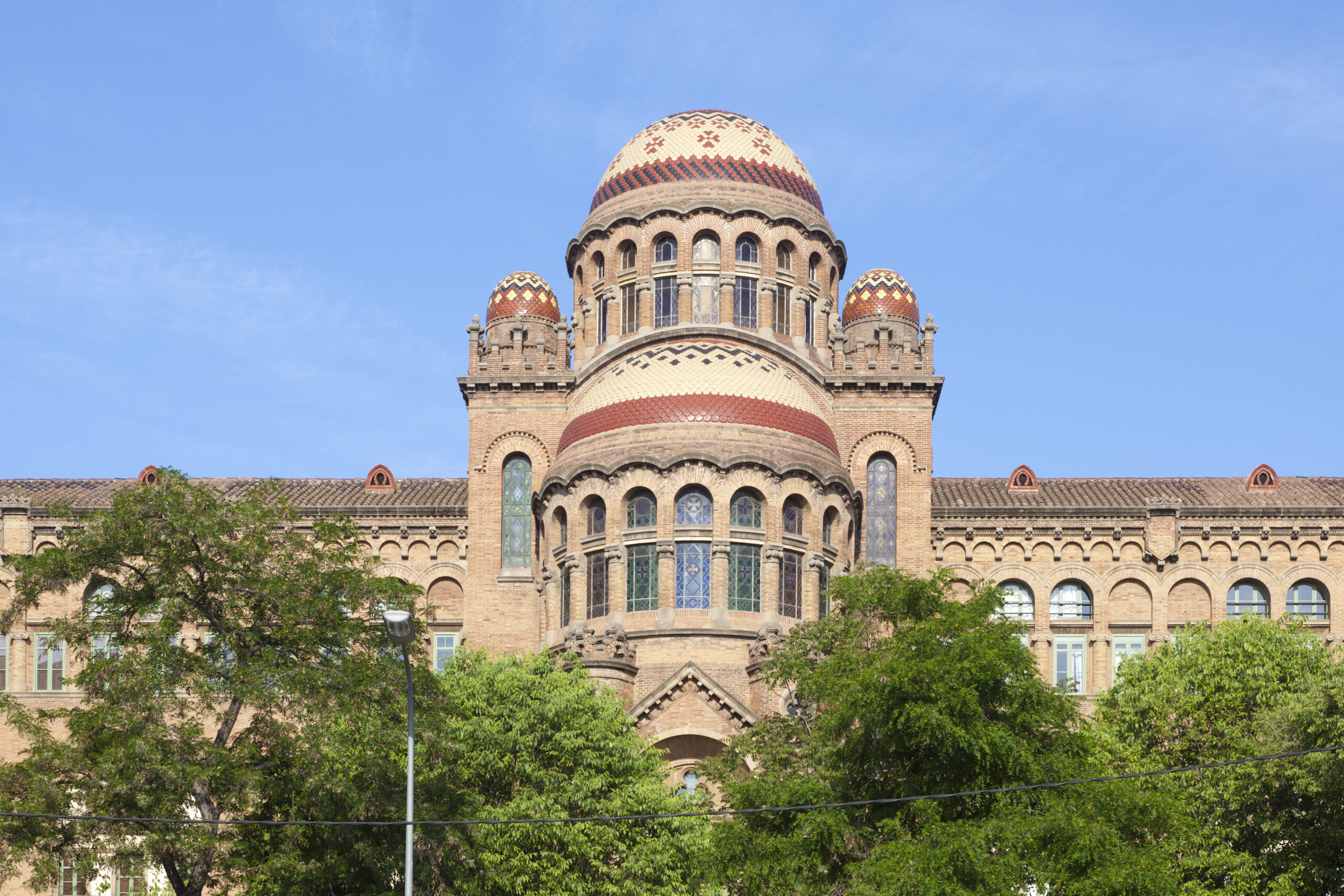
The Venue: We will hold the symposium at Casa Convalescència. Our venue, once a hospital for convalescent patients, forms part of a famous Art Nouveau architectural complex that was declared a World Heritage Site by UNESCO in 1997. The Universitat Autònoma de Barcelona (UAB) was granted use of the building in 1969 to develop academic activities and consolidate the university
