Category: Conferences (Page 2 of 2)

Stockholm Conference | Call for Papers

William Butler Yeats was awarded the Nobel Prize in literature in Stockholm in December 1923. This was an event that in many ways solidified Yeats’s place as one of the writers of the twentieth century, both home and abroad. The award placed him in the company of such luminaries as Rabindranath Tagore, Rudyard Kipling and Knut Hamsun, and later laureates have ranged from Samuel Beckett and Winston Churchill to Seamus Heaney and last year’s winner, Annie Ernaux. The award was an important event in Yeats’s life, associated both with the elevated (in Yeats’s memories of the lavish ceremony) and the mundane (as in anecdotes, such as the one involving the Yeats’s cooking sausages to celebrate the news of the award). Both Yeats’s lecture delivered to the Swedish Royal Academy, ‘The Irish Dramatic Movement’, and his travelogue ‘The Bounty of Sweden’, are significant parts of his oeuvre, the former particularly due to the way in which he selectively singled
out Lady Gregory and John Millington Synge when commemorating ‘the labours, triumphs and troubles of my fellow-workers’ in the establishment of the Abbey Theatre.

This academic conference, organized in tandem by the International Yeats Society and the English Department at Stockholm University, will celebrate the centenary of Yeats’s award. We invite papers on a range of topics related to Yeats and the Nobel Prize, and we are especially interested in papers that address the theme of elevation.

As a post- or late Romantic, Yeats frequently associated his art with ideas of transcendence, even while his writings often were ironic about this matter or addressed complications or failed quests. The play At the Hawk’s Well is one of many examples of the latter, also involving Yeats’s characteristic linking of his art with the elevation of the flight of birds. The falcon of ‘The Second Coming’ is another famous instance. Yet Yeats also wrote, in ‘The Municipal Gallery Re visited,’ that ‘All that we did, all that we said or sang / Must come from contact with the soil, from that / Contact everything Antaeus-like grew strong’.

Yeats’s desire for transcendence took a particular inflection through his lifelong engagement with mysticism and esoteric societies. A Vision is a particularly important expression of this dimension in Yeats’s writings, even if it can be traced throughout his oeuvre. There was always a religious dimension to his writings, even if he early on dismissed Victorian Christianity. Religious rituals and beliefs from a variety of cultures and contexts play an important role in his writings, involving him in what we might today describe as a ‘post-secular’ mode of thought and artistic expression.

The consecration of Yeats as one of the great writers of the twentieth century affected how other writers related to him. Traditionally, the status of being a master has involved having apprentices or followers –hence the Swedish elev and French élève. Yeats himself was not always sanguine about how such processes worked, as is evidenced by his poem ‘To a Poet, who would have me Praise certain Bad Poets, Imitators of His and Mine’. Yet ideas of influence and artistic affinity were key to his career, ranging from his collaborative efforts as part of the Irish Literary Revival, and his embrace of literary exemplars ranging from Rafferty to Shakespeare and the Romantics, to his theory of the mask. With regard to the latter, it is notable that Harold Bloom developed his own
theory of the anxiety of influence in close dialogue with Yeats’s ‘Per Amica Silentia Lunae’.

Plenary speakers:
– Roy Foster,  Emeritus Professor of Irish History at the University of Oxford and Emeritus Professor of Irish History and Literature at Queen Mary University of London
– Margaret Mills Harper, Glucksman Professor in Contemporary Writing in English at the University of Limerick
– Marjorie Howes, Associate Professor in English and Irish Studies, Boston College
– Paul Muldoon, Howard G.B. Clark ’21 University Professor in the Humanities and Professor of Creative Writing in the Lewis Center for the Arts at Princeton University

This conference will enable participants to address a variety of topics, including but not limited to the following:

  • Yeats and the Nobel Prize
  • The influence and reception of Yeats – both in Scandinavia and elsewhere
  • Yeats and the sacred
  • Yeats and transcendence
  • Yeats and tropes of elevation, including the flight of birds and tropes involving stars
  • Yeats and the canon – for instance of either England, Ireland or other countries
  • Yeats’s influence on the cultural milieu of his time
  • Yeats as a public figure or intellectual
  • The history of the Abbey Theatre

The conference will be an in-person event (i.e., there are no plans for online or hybrid components).

The conference will mainly take place on the premises of the University of Stockholm. There will also be some outings and events in other locations in the city of Stockholm, including the Town Hall of Stockholm and the Nobel Prize Museum in the Old Town of Stockholm. The conference fee will be 100 euros, covering the conference dinner as well as coffee and lunches.

Please forward paper proposals (20 minute papers, max 200 words abstracts) to the organising committee via Joakim Wrethed and Charles Armstrong by June 16. Contact Joakim Wrethed and
Charles Armstrong: joakim.wrethed@english.su.se and Charles.Armstrong@uia.no.

Please note that all participants must be payed-up members of the International Yeats Society. To sign up as a member, please use this link. 

We are keen to support Doctoral students and unwaged academics. We do this by maintaining a reduced IYS membership fee for these groups and offering travel bursaries. If you would like to be
considered for an IYS travel bursary please include, along with the abstract for your conference paper, a maximum 200-word statement outlining your case for support. This should include detail about your current research project and the relevance of the conference themes to your ongoing work. All applications will be considered by the conference organising committee/ IYS Executive Board.

Stockholm Conference 2023

Conference title: W. B. YEATS AND ELEVATION: THE NOBEL PRIZE CENTENARY CONFERENCE

Venue: University of Stockholm

Dates: 25 – 28 October 2023

Cfp: See this post for details.

The 2023 International Yeats Society conference will take place at the University of Stockholm from October 25 to 28. The conference will mark the fact that W. B. Yeats won the Nobel Prize for literature in 1923 and will have the title “W. B. Yeats and Elevation: The Nobel Prize Centenary Conference”.

York Conference 2021

Yeats and English

10-12 December 2021

Ye Olde Cheshire Cheese, London

For England may keep faith
For all that is done and said

W.B. Yeats, “Easter, 1916”

I remind myself that … I owe my soul to Shakespeare, to Spenser, and to Blake…and to the English language in which I think, speak and write, that everything I love has come to me through English

W.B. Yeats, “A General Introduction for My Work”

Given all the devolutions of British, Irish and world anglophone literatures, one small question became decentred quite some time ago: what is W.B. Yeats’s place in ‘English’ literature? It is a moot point whether Yeats thought that England would keep faith or whether a history of perfidy would continue. Yet the Englishness of Yeats is clear, and not just his inability to read or write in any other language: Blake, Spenser, Shelley, the poets of the Cheshire Cheese, Bedford Park, Stone Cottage, George Hyde Lees, the Macmillan Company. 

Yeats’s technical facility has secured for his poetry a central place in recent accounts of the persistence of Renaissance and Romantic models in the English-language poetry of the twentieth century. His poetry serves as one template for reading for form by student and poet alike. Yet in certain institutional ways his work has settled into the ‘Irish’ parts of the study and criticism of an international English Literature, from modern undergraduate curricula to major publishing presses. Given their tangential relationship with recent configurations of ‘modernism’ – historical professionalism and an emphasis on cultural specificity – the new conventions of ‘English’ have reconfigured the historicity of literary form, prioritising its many cross-historical and supra-national influences and collaborations. 

If many latter-day modernist studies emphasise an internationalist dimension, then what does their criticism make of Englishness as a regional category? Can we look again at a revised English canon forged by Yeats, along with other non-English London-based writers, like Eliot or Pound? And as English national identity rises again from a seeming dormancy, what has Yeats’s writing about – and participation in – national movements in history have to say to English writers and readers as they face a contemporary version of the ‘rough beast’ of illiberal political change?

Plenary speakers:

Peter McDonald, Christ Church, Oxford

Caoimhe Nic Dháibhéid, University of Sheffield

This symposium will enable participants to address a variety of topics suggested by the conference theme. Themes include:

Yeats and the English poets

Yeats and British regional modernism 

Literary London: Shaw, Wilde, Yeats, Eliot, Pound

The influence of Yeats on modern and contemporary poetry 

The end of Empires

Yeats’s politics and the inflexions of nationalism

Yeats and British policy in Ireland

Contemporary literary theory and the challenge nationalisms

Identity and poetry

Poetry and international theatre: polyglot form, monoglot writing

It is hoped to run this as an in-person event as far as possible. There will be hybrid element to the conference if Covid restrictions continue, with some sessions accessible online. 

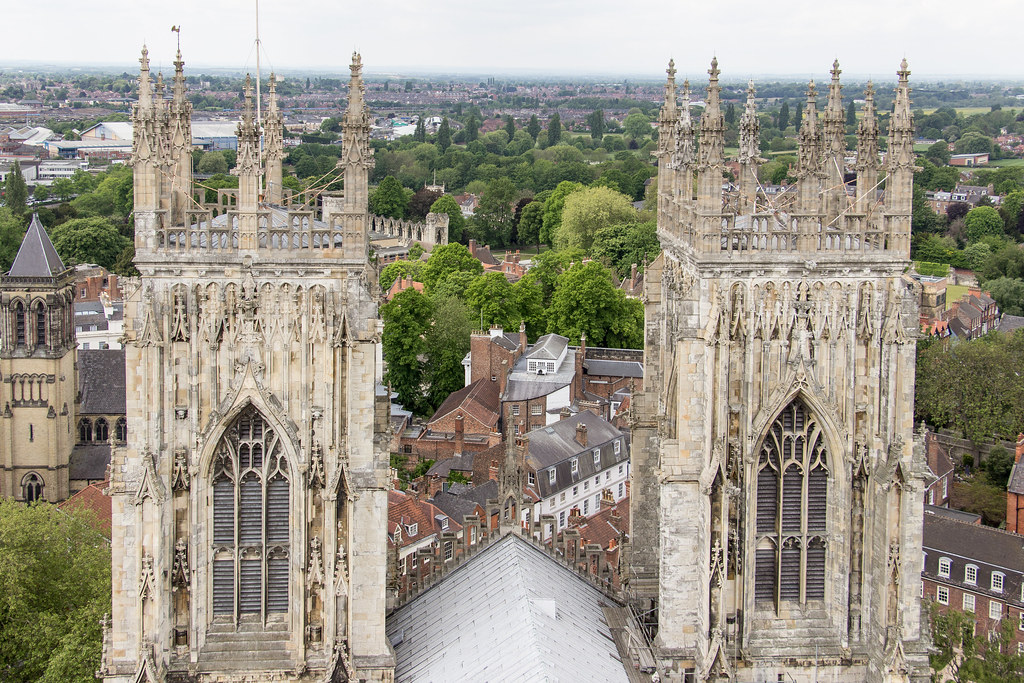
The Conference will take place in a city centre venue, The York Medical Society, Stonegate, York; restrictions permitting, we will also have an event in the University of York’s King’s Manor.

December in York can be busy due to tourism and Christmas shopping, so delegates are encouraged to book well ahead through the usual booking apps or through this website: https://www.visityork.org/ 

There is a small number of bookable rooms available in Franklin House on the University campus on a first come first served basis, about 20 min bus ride, 1.5 ml walk, from the city centre: https://yorkconferences.com/franklin-house/

Please forward paper proposals to the organising cttee via Matthew Campbell by 15 October 2021.

Registration will open September 2021.

Contact Matthew Campbell: matt.campbell@ york.ac.uk

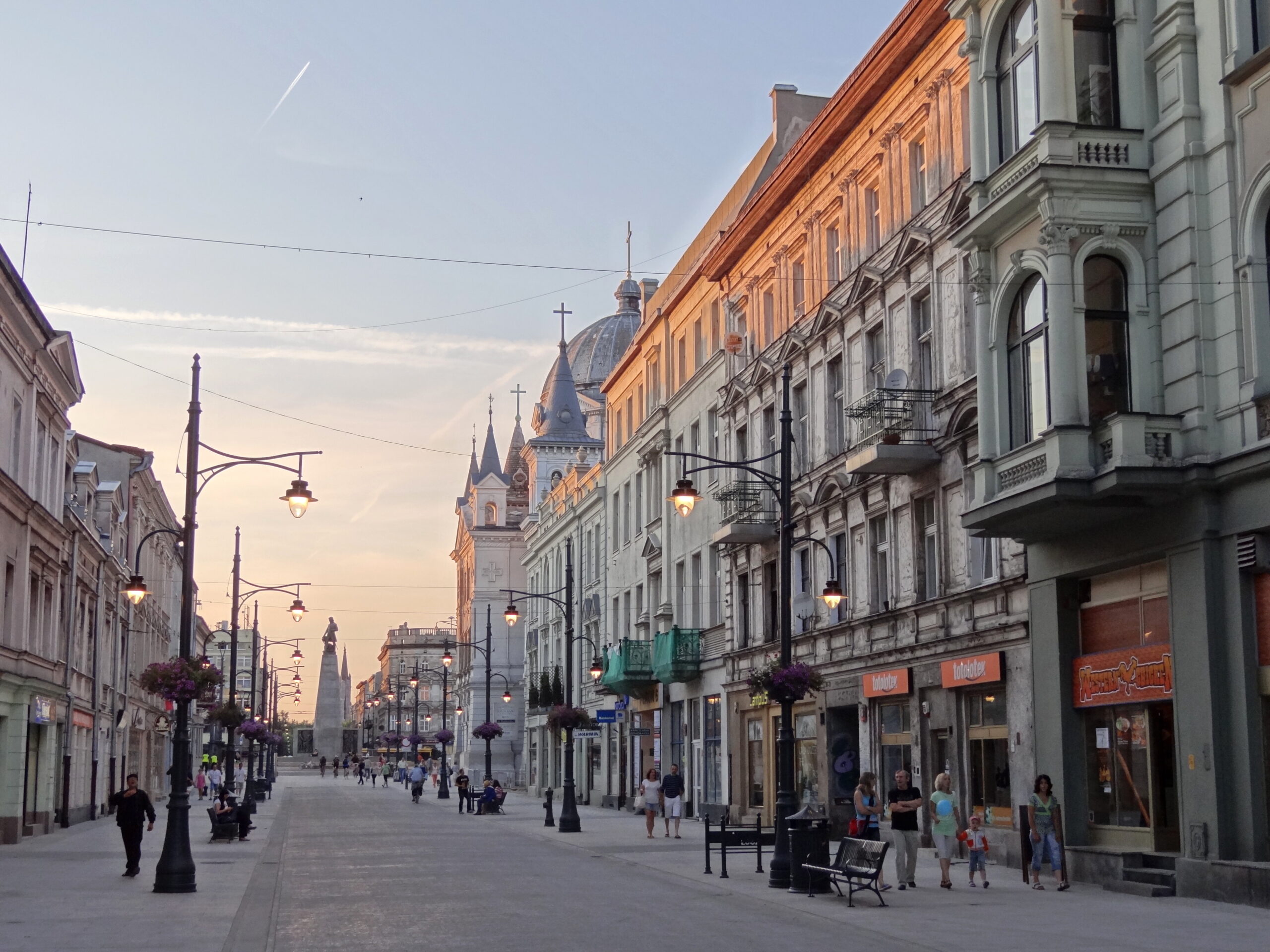
Łódź Online Conference 2020

December 11th-12th, 2020

Full information about the conference can be found here: Yeats and Popular Culture – 11-12 December 2020 – International Yeats Society and University of Łódź, Poland (lodz.pl

In view of the unasked for popularity that Yeats has won over the years, the conference aims to focus on a two-fold understanding of Yeats’s relationship with pop culture. On the one hand, we wish to explore the issue synchronically, concentrating on Yeats’s contemporary inroads into the realm of the popular, whether via endorsing public schemes, giving public readings, writing letters for the press or indeed spearheading an Irish theatre. On the other, we would like to encourage a diachronic approach to Yeats’s lasting influence on popular culture manifested in all manner of its outlets all over the known universe, from a member of the crew of the starship Enterprise (Star Trek again) quoting ‘The Song of Wandering Aengus’ all the way to Sean Bean’s dying recitation of ‘He Wishes for the Cloths of Heaven’ in a sci-fi classic Equilibrium (2002).

If you have not received a zoom link to the conference, please contact Wit Pietrzak ( WitPietrzak@wp.pl )

Agenda for the General Meeting:

1. Relocation of IYS from Buffalo to Ireland

2. Renewal of the executive board

3. Treasurer’s report

4. JIYS

5. IYS website, mailing list and social media

6. Future conferences

7. Any other business

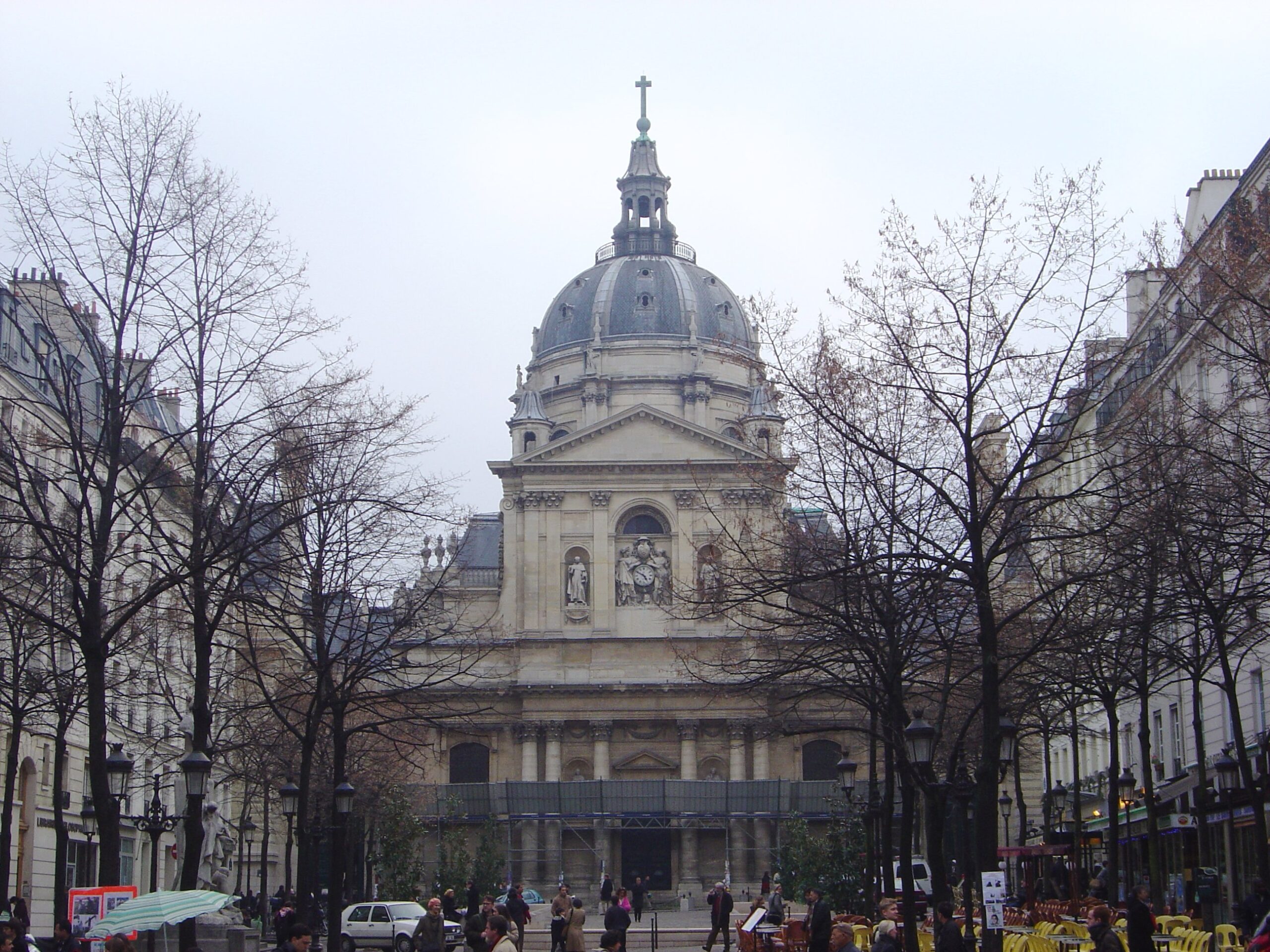
Paris Conference 2019

December 12-14, 2019

Yeats and Eros invite reappraisals of Yeats’s manifold and often unconventional explorations of the erotic in all its guises. The conference address the ways in which he toys with and renews the conventions of love poetry the embodied representations of desire on the stage, in speech, song or dance the space Yeats makes throughout his oeuvre for the visibility and audibility of unorthodox desires the erotics of delay and frustration on page and stage. Equally of interest are biographically-oriented papers investigating, for instance, the erotics of collaboration in the writing of A Vision, or indeed in all of Yeats’s collaborative ventures with fellow artists, writers, and performers of both genders.

Papers are also invited on the topic of Yeats and Paris. These can deal with any topic related to Yeats’ many visits to the city, including his formative stays in the 1890s. Papers can address his relationship to Symbolism or the life and/or works of French writers such as Paul Verlaine, Villiers de l’Isle-Adam or Stéphane Mallarmé. Also later movements and writers associated with France—including for instance fellow Irishmen such as Synge and Beckett, or Francophone writers responding to Yeats—may be a theme for papers. Another possibility is to look at references and allusions to Paris or France in Yeats’ poems or prose, or how his writings can be more generally contextualized in relation to Paris’s role as a geographical centre of literary modernism.

Organising committee: Inès Bigot (Sorbonne nouvelle), Carle Bonafous-Murat (Sorbonne nouvelle), Claire Davison (Sorbonne nouvelle),Pierre Longuenesse (Université d’Artois), Clíona Ní Ríordáin (Sorbonne nouvelle), Alexandra Poulain (Sorbonne nouvelle) et Kerry-Jane Wallart (Paris-Sorbonne)

Keynote speakers: Prof. Elizabeth Cullingford, University of Texas at Austin and Dr. Matthew Creasy, University of Glasgow

Kyoto Conference 2018

December 15-16, 2018

The International Yeats Society and the Yeats Society of Japan Joint Symposium in Kyoto 2018 was hosted in the Clock Tower Centennial Hall of Kyoto University and the Kashokaku Noh Theatre. This marks the 54th annual conference of the Yeats Society of Japan, and the 4th annual conference of the International Yeats Society.

This year’s theme was “Yeats and Laughter” including topics in thematic and cultural considerations in Yeatsean humor, Yeats and Kyogen, and Kyogen-laughter in Irish folklore & mythology.

New York City Conference 2017

October 20-22, 2017

Hosted by The New School University, Fordham University, and New York University/Glucksman Ireland House, this years theme was 1917, Yeats in America.

Featuring keynote addresses by Maureen Murphy (Hofstra) and Christopher Cahill (American Irish Historical Society). And readings by Nick Laird and Iggy McGovern.

Barcelona Conference 2016

Yeats & Asia: Imagining Asia through Yeats, Imagining Yeats through Asia

For some people the association of Yeats with Asia will suggest references to Byzantium, for others it will suggest Theosophy, the influence of Mohini Chatterjee, Occultism, Rabindranath Tagore or the Upanishads, and others still will think of Nōh theatre, masks, his fugitive use of Zen koans from D.T. Suzuki or the gyres as a version of Yin and Yang. Yeats made both explicit
references to Asian matters in his works, like the Buddha in “The Statues”, and implicit references that might be evident to Asian readers yet otherwise be opaque, like the “polished mirror” in Per Amica Silentiae
Lunae.

There is of course the vexed and vexing question of “Asia” itself, and what it might mean, if indeed it means any one thing. For the ancient Greeks it was the far shore of the Aegean Sea, the opposite and “Other” of their “Europe”, long before Edward Said called attention to the implications and consequences of “Orientalism”. Eurocentric discourse continues to speak of East Asia, if not the Far East, establishing its own vantage point as the defining norm. Some Chinese experts refer to Europe as the Far West. The Americas bordering on the Pacific Ocean have to “go West” to get to “the East”.

Many experts doubt that Yeats really or “correctly” understood the Asian cultural references that he found inspiring for his work and cherry-picked for his own purposes. Others doubt that it really mattered, since he turned everything he touched to his own idiosyncratic use anyway. Yeats’ work is abundant (14 volumes of Collected Works, the Cornell Yeats editions of manuscripts of plays and poems, more than 8,000 letters in the electronic edition, archival material) and varied (poetry, drama, folklore, fiction, essays, lectures, speeches, memoirs, and letters). Yeats’s “Asia” pervades much of it.

This symposium will be dedicated, on the one hand, to the uses that Yeats made of “his” Asia and the extent to which Euroamerican readers have appreciated this use, and on the other, to the uses that Asians have made of Yeats and to the elements of Yeats’ work that Asians perceive to be pertinent from an Asian point of view. It will broaden the base of Yeats Studies and bring new fields and experts to bear on Yeats.

Recordings of all 5 plenary talks from the Barcelona Symposium can be found at http://seangolden.ie/wp/plenary-talks/

Plenary speakers: Joseph Lennon (Villanova University), Akiko Manabe (Shiga University), Carrie J. Preston (Boston University), Jahan Ramazani (University of Virginia), Gauri Viswanathan (Columbia University)

Scientific Committee: Alexandra Poulain (IYS Vice-President), Youngmin Kim (IYS Board), Yoko Sato (IYS Board), Sanghita Sen (IYS Board), Joseph Lennon, Anapuma Mohan, Akiko Manabe, Malcolm Sen, Sean Golden

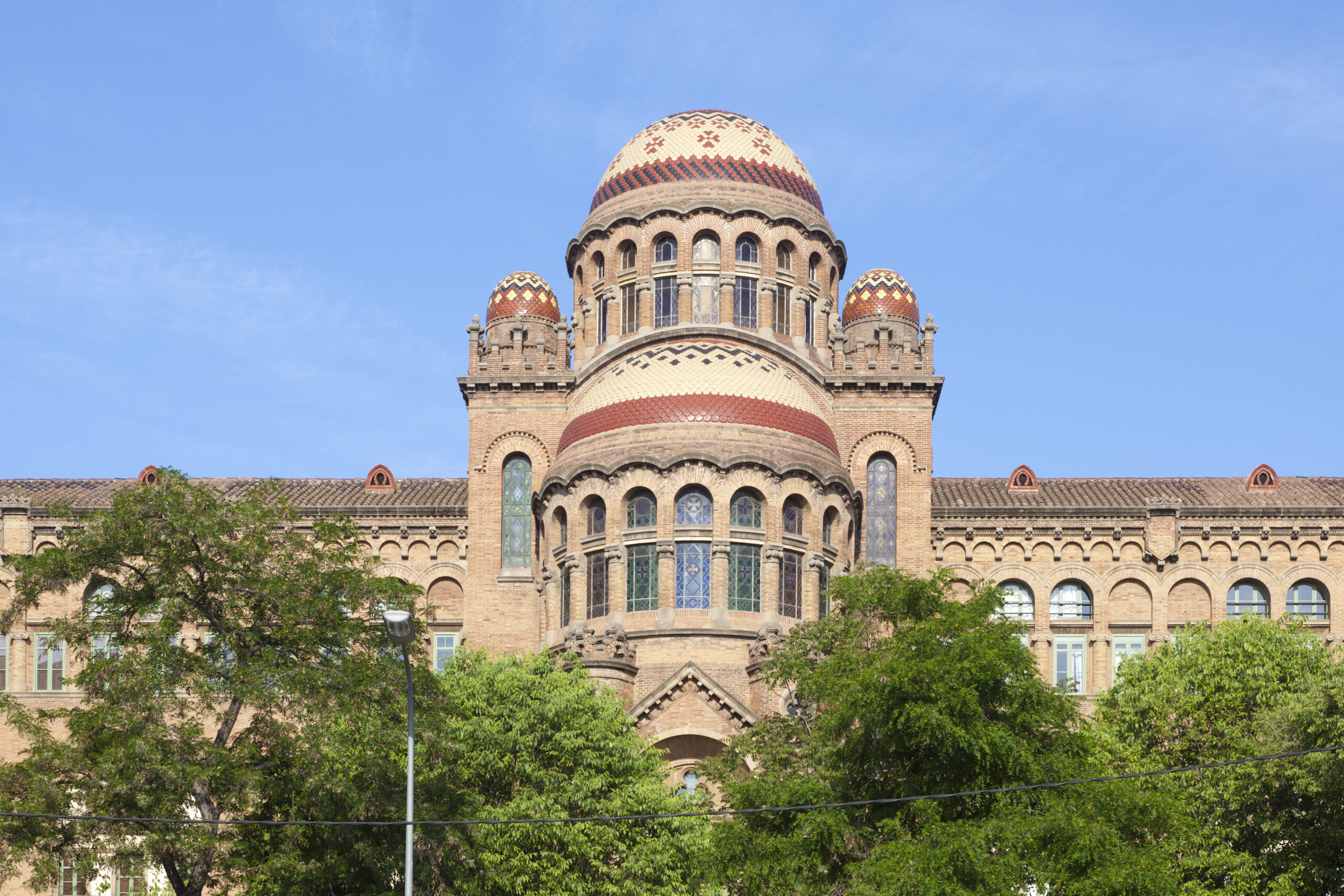
The Venue: We will hold the symposium at Casa Convalescència. Our venue, once a hospital for convalescent patients, forms part of a famous Art Nouveau architectural complex that was declared a World Heritage Site by UNESCO in 1997. The Universitat Autònoma de Barcelona (UAB) was granted use of the building in 1969 to develop academic activities and consolidate the university

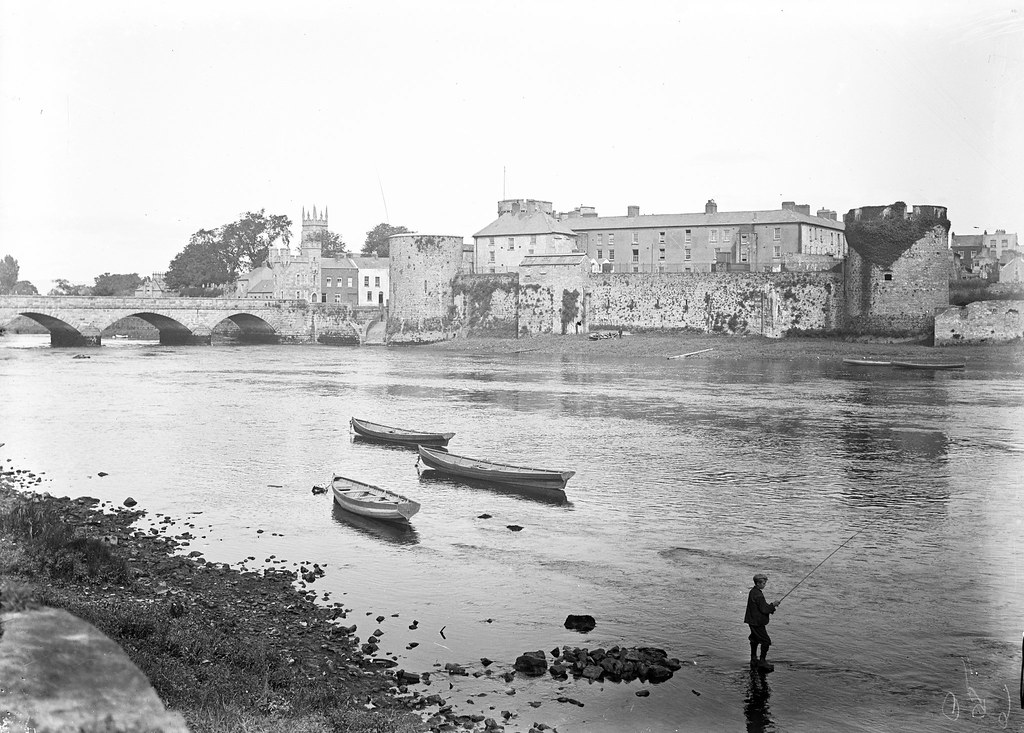
Limerick Conference 2015

A Writer Young and Old: Yeats at 150

This first meeting of the newly formed International Yeats Society featured scholars, teachers, and writers from nearly twenty countries, to discuss topics relevant to the study of Ireland’s national poet. In addition to academic panels and plenary lectures, the conference featured the launch of the Gilsenan Collection of rare Yeats materials at the Glucksman Library; a new Hungarian production of the dance play At the Hawk’s Well, with newly composed music and choreography; a concert featuring members of the Irish World Academy of Music and Dance; a poetry reading by award-winning Irish poet Caitríona Ní Chléirchín; and a post-conference bus tour of Yeats’s tower Thoor Ballylee, and Coole Park.

Plenary Speakers: Matthew Campbell (University of York), Marjorie Howes (Boston College), Alexandra Poulain (University of Lille)

15–18 October 2015. School of Culture and Communication, Scoil an Chultúir agus na Cumarsáide, University of Limerick, Ollscoil Luimnigh, Limerick, Ireland

Newer posts »