Tag: news (Page 1 of 2)

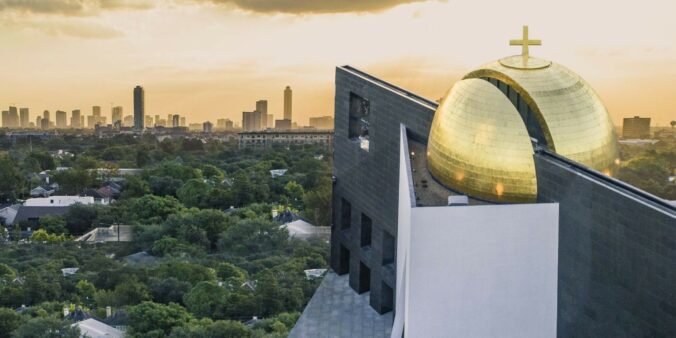
Houston Conference | Call for Papers

Yeats’s Locations

The 2026 Conference of the International Yeats Society

3 December to 5 December | The University of St. Thomas, Houston

Call for Papers

During his 1920 tour of the US, Yeats gave a lecture on “Friends of my Youth” at Baylor University in Waco, Texas, where he was billed, along with former US President William Howard Taft, as one of the “First Big Guns of the Baylor Diamond Jubilee.” The invitation suggested that Yeats would appeal to anyone keen on “world affairs,” while the student newspaper, The Lariat, promised that this lecture by “the foremost English man of letters now living” would mark “a great day in Baylor history.” The event, however, elicited mixed reviews, with Yeats’s autobiographical reminiscences about the 1890s “tragic generation,” appearing, in the estimation of the local press, “to pass over the heads of most of the audience.” The pre-event hype points explicitly to the varied and often contradictory ways that global audiences located Yeats in place, here as an “English” writer trafficking in “world affairs,” and it points implicitly to how Yeats’s self-presentations of identity and heritage were always changing relative to his actual and imagined audiences. 

The reference to “history” reminds us of Yeats’s ongoing attempts to locate his personal life within and relative to broader historical metanarratives, including for example Ireland’s national history or modernity writ large, and it calls to mind the literary history of Yeats Studies, where important new readings are frequently based on locating Yeats within new contexts, such as the postcolonial, the global, and the oceanic. Finally, Yeats’s retrospective regrets about a lecture that was, itself, a retrospective account of the friends of his youth highlights the complex temporal signatures which persist throughout his writings—his (sometimes strategic) reimaginings of Irish heritage, of historical figures, and of prior eras, his thoroughgoing sense of belatedness, his fascination with moments when a present “self” reckons with a past “self,” and his reliance on autobiographical speakers who gesture toward a future-present of “coming times” when his efforts might be properly understood or might be subject to further misrecognitions. 

“Yeats’s Locations” welcomes papers and panels on all Yeats-related topics, but we are especially interested in those that explore Yeats’s locations in place, history, and time. Topics might include:

    • Yeats’s American lecture tours.

    • Explorations of how Yeats’s contemporaries understood his identity relative to nationhood, heritage, literary eras and cultural movements, religion, or social class.

    • Yeats’s self-presentation for different audiences and / or in different genres (e.g., poetry, drama, autobiography, folklore, criticism, occult writings).

    • Yeats’s historical sensibility, responses to historiography, and productions of history in his writings.  

    • Reception history and perspectives that respond to, build upon, or introduce new contexts for “locating” and analyzing Yeats’s works. 

    • Time and temporality in Yeats’s writings, including how he locates speakers relative to human and / or otherworldly temporalities, as well as the aesthetic effects he generates by combining multiple temporalities in his works. 

Keynote lectures will be given by Dr. Richard Russell of Baylor University and Dr. Julie McCormick Weng of Texas State University. 

The organizers invite proposals of no more than 250 words for twenty-minute papers, three-paper panels, or discussion roundtables on the topic of “Yeats’s Locations.” In keeping with the International Yeats Society’s general practice, proposals are invited on other aspects of Yeats’s work as well. Please also include a brief biographical sketch of up to 50 words for each speaker. Proposals should be emailed to irishstudies@stthom.edu with the subject line “IYS Proposal.” The deadline for early acceptance is June 30th. The final deadline is September 30th.

We offer a limited number of graduate student bursaries to assist those who could not otherwise afford to attend. These funds are awarded following the deadline for submission. Bursary applications should be submitted via this form:

Bursary Application Form – Fill out form

Accommodations

We have secured special discount accommodation rates at the following hotels.

DoubleTree by Hilton Hotel Houston, Greenway Plaza

Booking Link

Rate: $129/night

Reservation Deadline: November 12

Distance: 3 miles from campus (shuttle transport provided)

Hotel Zaza, Museum District

Booking Link

Discount Code: UST745

Rate: $199/night

Reservation Deadline: November 3

Distance: 1 mile from campus

Hotel St. Augustine

Booking Link

Discount Code: 1040614

Rate: $252/night

Distance: 0.3 miles from campus
Dublin Conference | Call For Papers

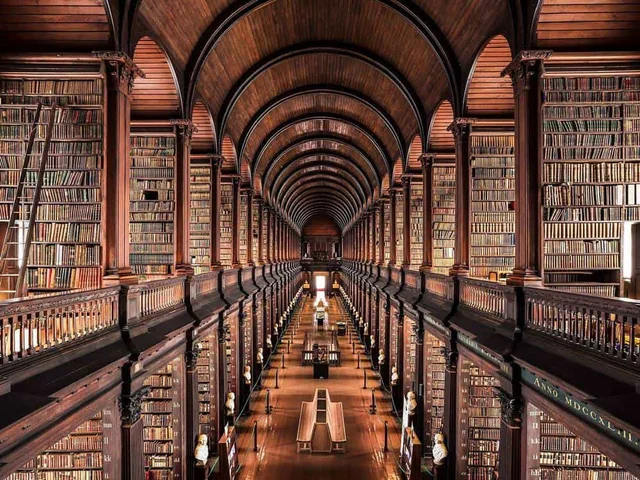
W. B. YEATS: DUBLINER

The 2025 Conference of the International Yeats Society
30 October to 1 November | Trinity College Dublin

CALL FOR PAPERS
Reviewing Lady Wilde’s Ancient Cures, Charms, and Usages of Ireland in 1890, W. B. Yeats bemoaned that ‘around and northward of Dublin no small amount of gloom has blown from overseas’. Just outside the city in Howth, however, he noted that ‘the old life goes on but little changed’; the hospital patients of Sir William Wilde, drawn to Dublin from across Ireland, had also offered a rich source of folklore now being ‘quarried’ in his widow’s latest book. This review captures something of the complexity of the city’s culture, as well as its close yet fraught relationship with the rest of the country. Such complexity and contestation has been an under-regarded aspect of scholarly writing on Yeats’s work.

At different points in his life, the poet resided in many parts of Dublin and its environs. Significant parts of his education took place in the city. He was also formed by and an inveterate shaper of many of its cultural organisations and institutions. Important too was Dublin’s then vibrant and distinctive salon culture. A site of many close friendships and collaborations, the city was for periods the location of his father’s and brother’s studios, and his sisters’ Arts and Crafts enterprises. Through Dun Emer and Cuala, Yeats also had direct involvement in the local publishing of his and others’ writings. Furthermore, the city is a setting for many of his works – from the protagonist sat dreaming in a house in ‘the old parts of Dublin’ in the 1896 short story ‘Rosa Alchemica’ to the recollections of encounters on its streets that open ‘Easter 1916’. Whatever his stated antipathy to the city and its environs, including as a site of British-influenced urban modernity, the poet was very much a Dubliner.

Taking place in the heart of the city at Trinity College – an institution the poet condemned in 1892 for having ‘shut itself off from every kind of ardour, from every kind of fiery and exultant life’ – this conference offers an opportunity to reflect on Yeats’s working life in Dublin, and the place of the city and its cultures in his work. Confirmed keynote lecturers include Gregory Castle (Arizona State University) and Emilie Morin (University of York).


The organisers invite proposals of no more than 250 words for twenty-minute papers, three-paper panels or discussion roundtables on the topic of ‘W. B. Yeats: Dubliner’. In keeping with the International Yeats Society’s general practice, proposals are invited on other aspects of Yeats’s work as well. Please also include a brief biographical sketch of up to 50 words for each speaker.

Proposals should be emailed to yeats2025@tcd.ie. The deadline for submission is 16 June.


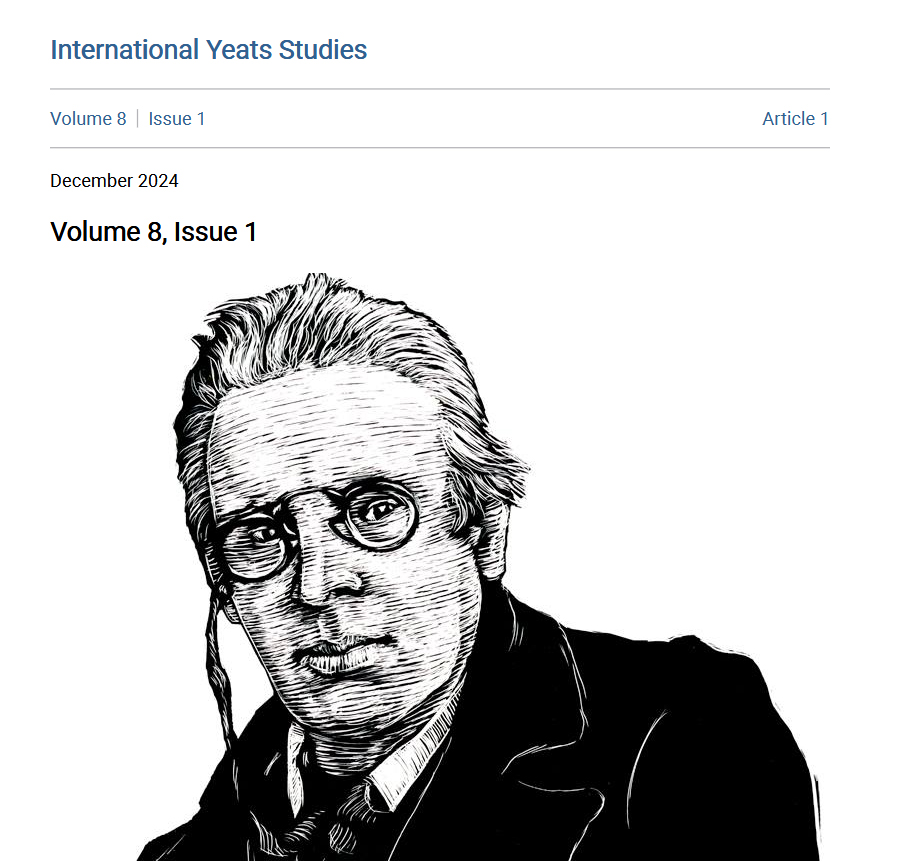
IYS Issue 8.1

The International Yeats Society is pleased to announce that issue 8.1 of the International Yeats Studies journal is now available. You can access it by using the following link:

open.clemson.edu/iys/

The International Yeats Society is committed to being an open access journal, which means that all of the costs for producing each issue come from our membership. If you are not currently a member of the International Yeats Society, consider supporting our mission of fostering academic collaboration across borders by joining today.

The WB Yeats Society of NY’s annual Yeats Poetry Prize is now open for submissions!

The WB Yeats Society of NY’s annual Yeats Poetry Prize is open for submissions through February 1 of the new year. Poems in English on any topic (up to 60 lines each) may be entered by using the following link:

https://Yeats.Submittable.com/submit

The contest is open to anyone, any age, anywhere in the world.

Entry fees: $15 for first poem, $12 for each additional.

First prize $1,000, second $500, and honorable mentions. Winners are recognized at a public event in New York City in April, National Poetry Month. 

The WB Yeats Society of NY offers the yearly competition to honor its namesake and to recognize the valuable contributions poets and poetry make to human consciousness and enlightenment.  Poet January O’Neil will judge the competition, now in its 29th year. Ms. O’Neil also chose the 2024 poems. 

Mariana & Ouro Preto Conference | Second Call for Papers

In section XII of “The Bounty of Sweden”, published transatlantically in both the London Mercury and The Dial in September 1924, Yeats (in)famously conjures two forms to stand at his side onstage at the Swedish Academy: “When your King gave me medal and diploma, two forms should have stood, one at either side of me, an old woman sinking into the infirmity of age and a young man’s ghost.” (Au 535). By invoking JM Synge and Augusta Gregory, Yeats highlights the importance of collaboration in organised movements, societies, and schools in order to effect cultural and social change. Etymologically, coniuro in Latin and its later descendants maintain the prefix con-, indicating that whoever conjures, swears with others, in a conspiracy of at least two. From as early as his swearing into the Irish Republican Brotherhood in the 1880s, throughout his life Yeats was certainly a conjurer in this more archaic sense, as someone who bound himself to others even as he posed as the outcast poet. Creating and dissolving organisations, log-rolling with friends’ publications, shifting allegiances, staging coups and joining splinter groups, in his many arenas of action Yeats attempted to influence the world around him by collective effort.

As a theme for the hybrid 2024 International Yeats Society Conference, Conjuring Yeats comes to the Minas Gerais, the homeplace of the “Conjuração Mineira”, an early separatist movement that sought to create an independent republic in the province of Minas Gerais. Its repression by the Portuguese Crown and the plight of the “conjurates” was incommensurate, and although other rebels had their sentences commuted, the public hanging of its main instigator, known as Tiradentes (or Toothpuller, as Elizabeth Bishop, herself a longtime resident of Ouro Preto, called him), on the 21st of April 1792 took on the Christological imagery later associated to Ireland’s own Easter Rising of 1916.

This conference will address a variety of topics, including but not limited to the following:

  • Yeats, organisations, and secret societies, including political parties;
  • Yeats’s conspirators & collaborators, members of the Irish Revival or modernist cliques;
  • Yeats, rebellion and political strife;
  • Yeats, magic, and belief;
  • Conjuring in non-anglophone contexts: translation and edition as transmutation;
  • The theatrical stage as a space of conjuration
  • Other writers haunted by Yeats or the Minas Gerais “conjurates”. The conference will be hybrid and the in-person events will take place primarily on the Humanities premises of the Universidade Federal de Ouro Preto, in the city of Mariana. Online participation includes:
  • Individual paper participation in fully online or hybrid panels;
  • Participation in full panel proposed as a group, either fully online or hybrid;
  • Remote attendance to online and hybrid panels as well as keynotes. There will also be two different time slots available for remote panels: one in the morning and one in the afternoon, to cater for different time zones (we are in BRT zone, at GMT-3).

Keynotes by Neil Mann (researcher, Finland) and Bruce Stewart (UFRN, Brazil), roundtable with Ragini Mohite (FLAME University, India) and Barry Sheils (Durham University, UK), a new voices lecture by Charika Swanepoel (Turku University, Finland), and pocket performance and interview with the creators of the new adaptation of At the Hawk’s Well in Brazil, Emilie Sugai and Fabio Mazzoni (in Portuguese with consecutive translation).

Please submit proposals for individual papers, group panels or banners to the organising committee via this form by November 10th:

https://docs.google.com/forms/d/e/1FAIpQLSd6bpR3JWNbWItYrMDkbfR5WqA-RFTYGD636WFFxAzVUGMJxg/viewform

If you encounter any problems, please email yeatsbrazil@ufop.edu.br. More information is available on the conference website, https://yeatsbrazil.ufop.br/, and on our Instagram @yeatsbrazil_.

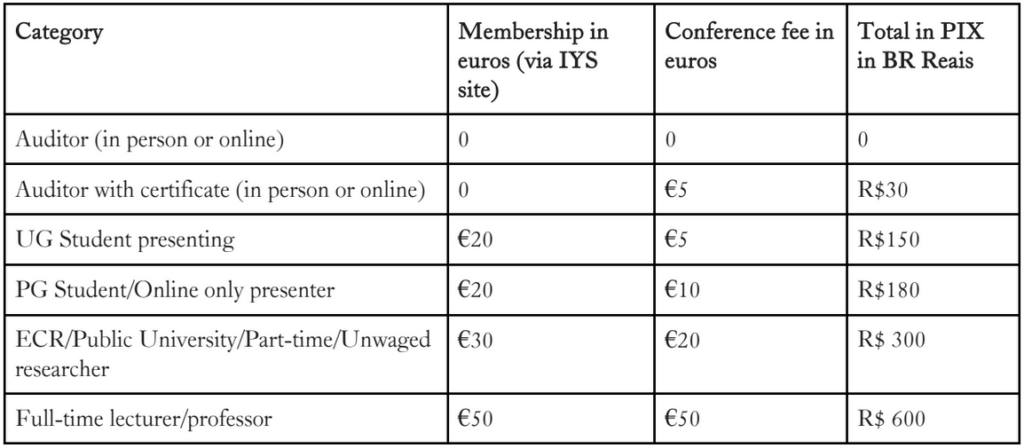
We are keen to support students and academics who are not employed full-time or work in public universities. Conference costs are kept to a minimum and will be as follows, payable by credit card (via IYS), PIX (for Brazilians) or transfer (please contact Rita at m.rita.viana@ufop.edu.br):


A pre-conference excursion to the Inhotim Museum in Brumadinho can be arranged for all interested attendees on the Sunday before the event, December 8. More information is available on the conference website. If you intend to attend the pre-conference excursion, please plan to arrive in Belo Horizonte by December 7 and stay overnight because we leave for Inhotim early on Sunday.

The IYS membership supports students by offering travel bursaries. The bursary is paid up to 800 euros as reimbursement on expenses incurred. If you would like to be considered for the IYS travel bursary please include your abstract, a maximum 200-word statement outlining your case for support to the presidency (Charles.Armstrong@uia.no). This should include detail about your current research project and the relevance of the conference to your ongoing work. All applications will be considered by the conference organising committee/IYS executive Board. Please note that all presenters must be paid-up members of the International Yeats Society. To sign up, please use the following link:

https://internationalyeatssociety.org/members/

The deadline for proposals is November 10th. Registration will open November 1st.


New Release: The Edinburgh Companion to W.B. Yeats and the Arts

Newly available to purchase is The Edinburgh Companion to W. B. Yeats and the Arts, edited by Charles I. Armstrong, Adrian Paterson and Tom Walker.

W. B. Yeats was not only a poet but also a restless collaborator, fostering countless artistic enterprises, from the Abbey Theatre to the Cuala Press, and pursued various inter-artistic media and forums for his work. From childhood co-creations with his siblings to the arresting combination of sound and movement in his final play, The Death of Cuchulain, his work also repeatedly addresses and incorporates music, dance, and the visual, material and theatrical arts with remarkable intensity. For him, literature was a vital thing that engaged, in one form or another, all the senses. This volume’s newly commissioned chapters analyse afresh such engagements. Bringing together scholars of literature, aesthetics, cultural history and specialists in drama, music, dance and the visual arts, they provide a broad range of historical, conceptual, and disciplinary approaches and perspectives.

Use the discount code NEW30 to save 30% off through the link below.

https://www.edinburghuniversitypress.com/book-the-edinburgh-companion-to-w-b-yeats-and-the-arts.html

The Edinburgh Companion to W. B. Yeats and the Arts

The Edinburgh Companion to W. B. Yeats and the Arts, edited by Charles I. Armstrong, Adrian Paterson and Tom Walker – Launch discount code is NEW30 for 30% off.

W. B. Yeats was not only a poet but also a restless collaborator, fostering countless artistic enterprises, from the Abbey Theatre to the Cuala Press, and pursued various inter-artistic media and forums for his work. From childhood co-creations with his siblings to the arresting combination of sound and movement in his final play, The Death of Cuchulain, his work also repeatedly addresses and incorporates music, dance, and the visual, material and theatrical arts with remarkable intensity. For him, literature was a vital thing that engaged, in one form or another, all the senses. This volume’s newly commissioned chapters analyse afresh such engagements. Bringing together scholars of literature, aesthetics, cultural history and specialists in drama, music, dance and the visual arts, they provide a broad range of historical, conceptual, and disciplinary approaches and perspectives.

The Passing of Helen Vendler

The International Yeats Society is deeply saddened to learn of the death of Helen Vendler—the outstanding scholar of Yeats and other modern poets,  A. Kingsley Porter University Professor at Harvard and regular contributor to the Yeats International Summer School. Helen has been a key inspiration for many Yeatsians and her books on Yeats or which include Yeats have informed generations of students. Her obituary is available here: https://www.shelf-awareness.com/issue.html?issue=4713#m63609

Stockholm Conference | Call for Papers

William Butler Yeats was awarded the Nobel Prize in literature in Stockholm in December 1923. This was an event that in many ways solidified Yeats’s place as one of the writers of the twentieth century, both home and abroad. The award placed him in the company of such luminaries as Rabindranath Tagore, Rudyard Kipling and Knut Hamsun, and later laureates have ranged from Samuel Beckett and Winston Churchill to Seamus Heaney and last year’s winner, Annie Ernaux. The award was an important event in Yeats’s life, associated both with the elevated (in Yeats’s memories of the lavish ceremony) and the mundane (as in anecdotes, such as the one involving the Yeats’s cooking sausages to celebrate the news of the award). Both Yeats’s lecture delivered to the Swedish Royal Academy, ‘The Irish Dramatic Movement’, and his travelogue ‘The Bounty of Sweden’, are significant parts of his oeuvre, the former particularly due to the way in which he selectively singled
out Lady Gregory and John Millington Synge when commemorating ‘the labours, triumphs and troubles of my fellow-workers’ in the establishment of the Abbey Theatre.

This academic conference, organized in tandem by the International Yeats Society and the English Department at Stockholm University, will celebrate the centenary of Yeats’s award. We invite papers on a range of topics related to Yeats and the Nobel Prize, and we are especially interested in papers that address the theme of elevation.

As a post- or late Romantic, Yeats frequently associated his art with ideas of transcendence, even while his writings often were ironic about this matter or addressed complications or failed quests. The play At the Hawk’s Well is one of many examples of the latter, also involving Yeats’s characteristic linking of his art with the elevation of the flight of birds. The falcon of ‘The Second Coming’ is another famous instance. Yet Yeats also wrote, in ‘The Municipal Gallery Re visited,’ that ‘All that we did, all that we said or sang / Must come from contact with the soil, from that / Contact everything Antaeus-like grew strong’.

Yeats’s desire for transcendence took a particular inflection through his lifelong engagement with mysticism and esoteric societies. A Vision is a particularly important expression of this dimension in Yeats’s writings, even if it can be traced throughout his oeuvre. There was always a religious dimension to his writings, even if he early on dismissed Victorian Christianity. Religious rituals and beliefs from a variety of cultures and contexts play an important role in his writings, involving him in what we might today describe as a ‘post-secular’ mode of thought and artistic expression.

The consecration of Yeats as one of the great writers of the twentieth century affected how other writers related to him. Traditionally, the status of being a master has involved having apprentices or followers –hence the Swedish elev and French élève. Yeats himself was not always sanguine about how such processes worked, as is evidenced by his poem ‘To a Poet, who would have me Praise certain Bad Poets, Imitators of His and Mine’. Yet ideas of influence and artistic affinity were key to his career, ranging from his collaborative efforts as part of the Irish Literary Revival, and his embrace of literary exemplars ranging from Rafferty to Shakespeare and the Romantics, to his theory of the mask. With regard to the latter, it is notable that Harold Bloom developed his own
theory of the anxiety of influence in close dialogue with Yeats’s ‘Per Amica Silentia Lunae’.

Plenary speakers:
– Roy Foster,  Emeritus Professor of Irish History at the University of Oxford and Emeritus Professor of Irish History and Literature at Queen Mary University of London
– Margaret Mills Harper, Glucksman Professor in Contemporary Writing in English at the University of Limerick
– Marjorie Howes, Associate Professor in English and Irish Studies, Boston College
– Paul Muldoon, Howard G.B. Clark ’21 University Professor in the Humanities and Professor of Creative Writing in the Lewis Center for the Arts at Princeton University

This conference will enable participants to address a variety of topics, including but not limited to the following:

  • Yeats and the Nobel Prize
  • The influence and reception of Yeats – both in Scandinavia and elsewhere
  • Yeats and the sacred
  • Yeats and transcendence
  • Yeats and tropes of elevation, including the flight of birds and tropes involving stars
  • Yeats and the canon – for instance of either England, Ireland or other countries
  • Yeats’s influence on the cultural milieu of his time
  • Yeats as a public figure or intellectual
  • The history of the Abbey Theatre

The conference will be an in-person event (i.e., there are no plans for online or hybrid components).

The conference will mainly take place on the premises of the University of Stockholm. There will also be some outings and events in other locations in the city of Stockholm, including the Town Hall of Stockholm and the Nobel Prize Museum in the Old Town of Stockholm. The conference fee will be 100 euros, covering the conference dinner as well as coffee and lunches.

Please forward paper proposals (20 minute papers, max 200 words abstracts) to the organising committee via Joakim Wrethed and Charles Armstrong by June 16. Contact Joakim Wrethed and
Charles Armstrong: joakim.wrethed@english.su.se and Charles.Armstrong@uia.no.

Please note that all participants must be payed-up members of the International Yeats Society. To sign up as a member, please use this link. 

We are keen to support Doctoral students and unwaged academics. We do this by maintaining a reduced IYS membership fee for these groups and offering travel bursaries. If you would like to be
considered for an IYS travel bursary please include, along with the abstract for your conference paper, a maximum 200-word statement outlining your case for support. This should include detail about your current research project and the relevance of the conference themes to your ongoing work. All applications will be considered by the conference organising committee/ IYS Executive Board.

« Older posts